USB-C PD - This Changed Everything (and confused everyone)
Okay so USB-C Power Delivery is probably the best thing that's happened to camera power in the last 5 years, but hey is it confusing.
First off, not all USB-C ports are the same. We cannot stress this enough. We get calls every week: "Why won't my battery charge my laptop?" Because that USB-C port on your battery is just a regular 5V USB port in a different shape. It's not PD. The manufacturer just wanted it to look modern.
Real USB-C PD is smart. Your laptop says "I need 20V at 3A" and the battery says "okay, here's 20V at 3A." That negotiation happens automatically. It's beautiful when it works.
Here's what actually matters:
The wattage. A USB-C PD port rated for 30W is basically useless for anything serious. You can charge your phone fast, that's it. Your MacBook will charge, but glacially slow, and if you're actually using it, it'll still drain.
You want 60W minimum. Better is 100W. At 100W you can actually run a MacBook Pro while editing, or charge it properly, or power those USB-C monitors that are becoming popular, or even run a DJI Ronin gimbal directly.
The cable matters more than you think
This bit us hard last year. We had a customer absolutely furious that his new battery wouldn't power his laptop. We went back and forth for two days. Finally we asked him to try a different cable. Boom, worked perfectly.
Turns out he was using a cheap USB-C cable that came with his phone. Those are often just USB 2.0 with a USB-C connector - they'll do 5V and that's it. For PD you need a cable that's rated for it. Look for "USB-C PD" or "100W" or "20V/5A" printed on the cable itself.
And they're not all the same quality. We've seen cables that claim 100W but get hot and start limiting power after a few minutes. Anker and Apple cables work. The €3 ones from random Amazon sellers? Coin flip.
The voltage thing is weird
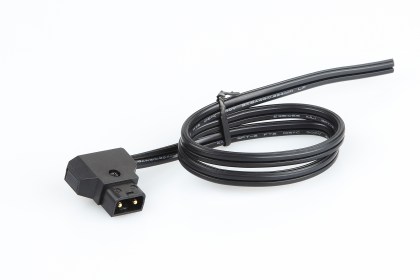
Unlike D-Tap which is whatever voltage your battery happens to be (16.8V when full, 12V when dying), USB-C PD jumps between specific voltages: 5V, 9V, 12V, 15V, or 20V.
Your device and battery negotiate which one to use. Most laptops want 20V. Some monitors want 12V. Your phone is happy with 9V for fast charging.
You don't control this. It just happens. Sometimes it works, sometimes your device and battery can't agree and you get nothing. It's frustrating when it fails because there's no error message, it just... doesn't work.
What we actually see people using it for
Honestly? Laptops. Being able to run a MacBook off the same battery as the camera is incredible for DIT work. You can ingest footage on location without worrying about finding a wall outlet.
Also, the Sony FX6 and Canon C70 can be powered by USB-C PD. Game changer. One battery type for everything. No more dummy batteries, no weird cables, just USB-C.
And yeah, keeping phones charged. Which sounds trivial but when you're using your phone as a monitor, it dies by lunch.
The future is probably all USB-C
We've been selling batteries for 20 years. V-Mount has been the standard forever. But we think in 5-10 years, we'll see way more USB-C powered cameras and accessories. It's just more universal.
The downside? USB-C maxes out around 100W (technically 240W exists but nobody uses it yet). V-Mount can deliver 150W+ easily. So for high-power cinema cameras, V-Mount isn't going anywhere.
But for mirrorless, gimbals, monitors? Yeah, USB-C is taking over.
One weird thing nobody tells you
Some batteries have USB-C ports that can work both ways - they can output power AND you can charge the battery through that same port. Which is cool in theory.
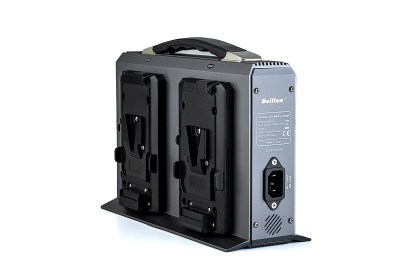
In practice? We've never seen anyone actually use it. You'd need a USB-C charger powerful enough (65W+), and at that point why not just use the regular V-Mount charger which is faster anyway.
But it exists. Just... FYI.